
We watch what is true now, not what was said last week
When the runway gets short, you get a clear alert based on actual bank data. The timing is made explicit, so you know immediately how much time is left.
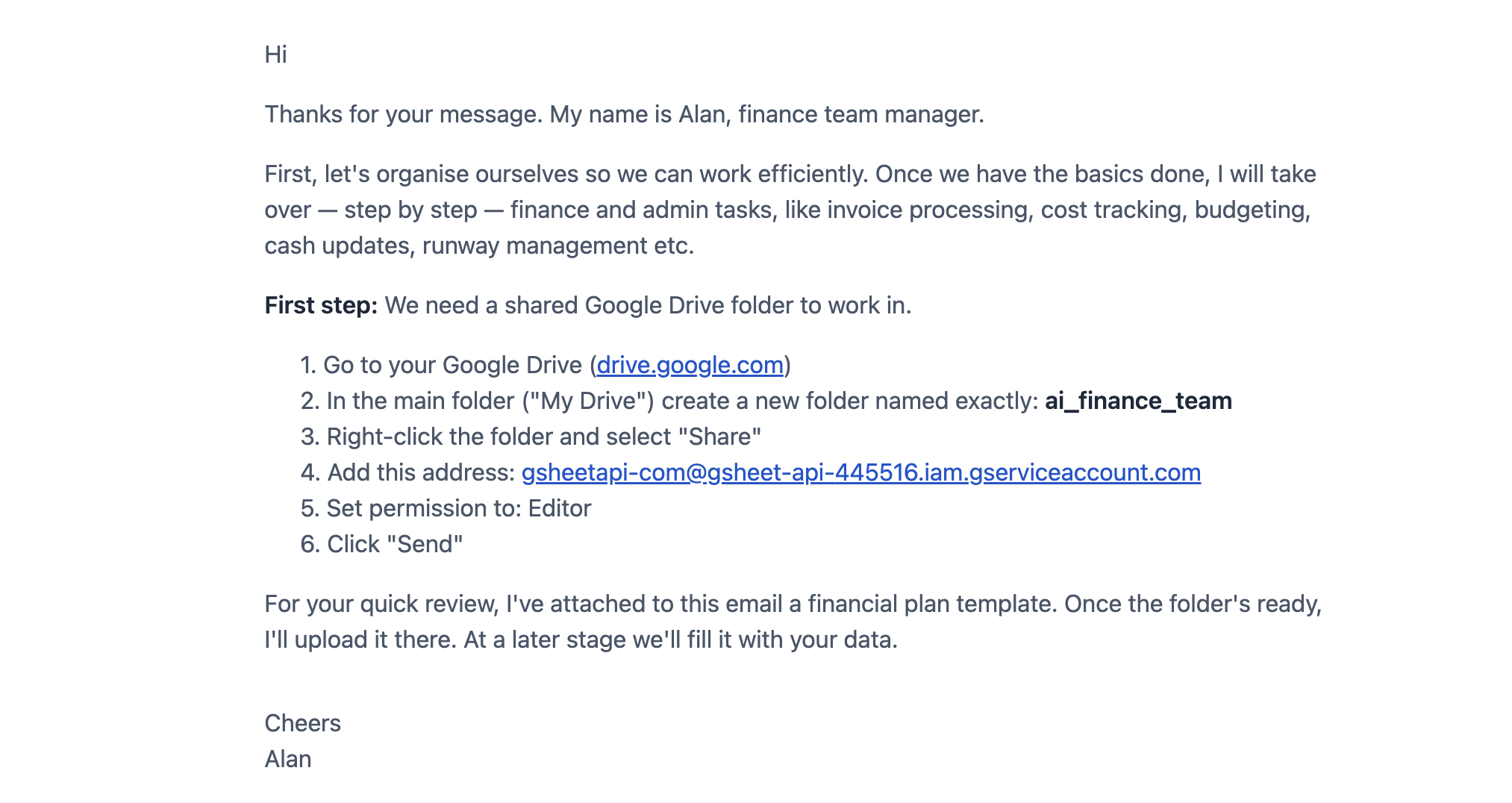
We work through the same channels you already use: email and shared Google files. You do not need to know finance, you do need to tell us what to do - we take ownership and do the work. We follow up when something is missing and bring back required actions.
We work like humans do.
We communicate in the same rhythm as a human finance team: you get the next step, the work gets done, follow-ups arrive when something is missing.
Alan is the manager of the team, giving your communication a clear point of contact while the team handles the work behind the scenes.
We run monitoring and control in the background, we alert you immediately when something needs your attention, decision or action.
When the runway gets short, you get a clear alert based on actual bank data. The timing is made explicit, so you know immediately how much time is left.
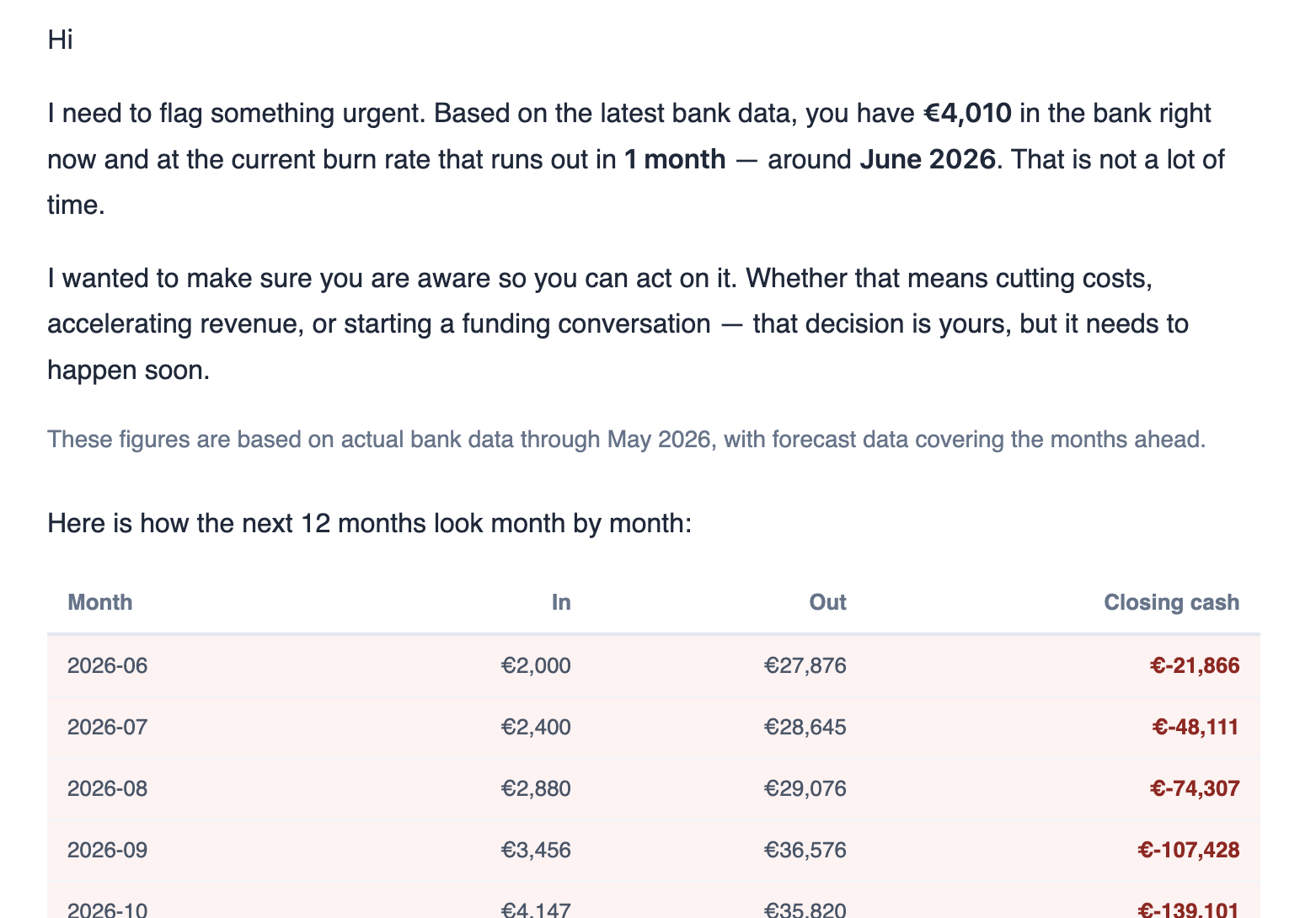
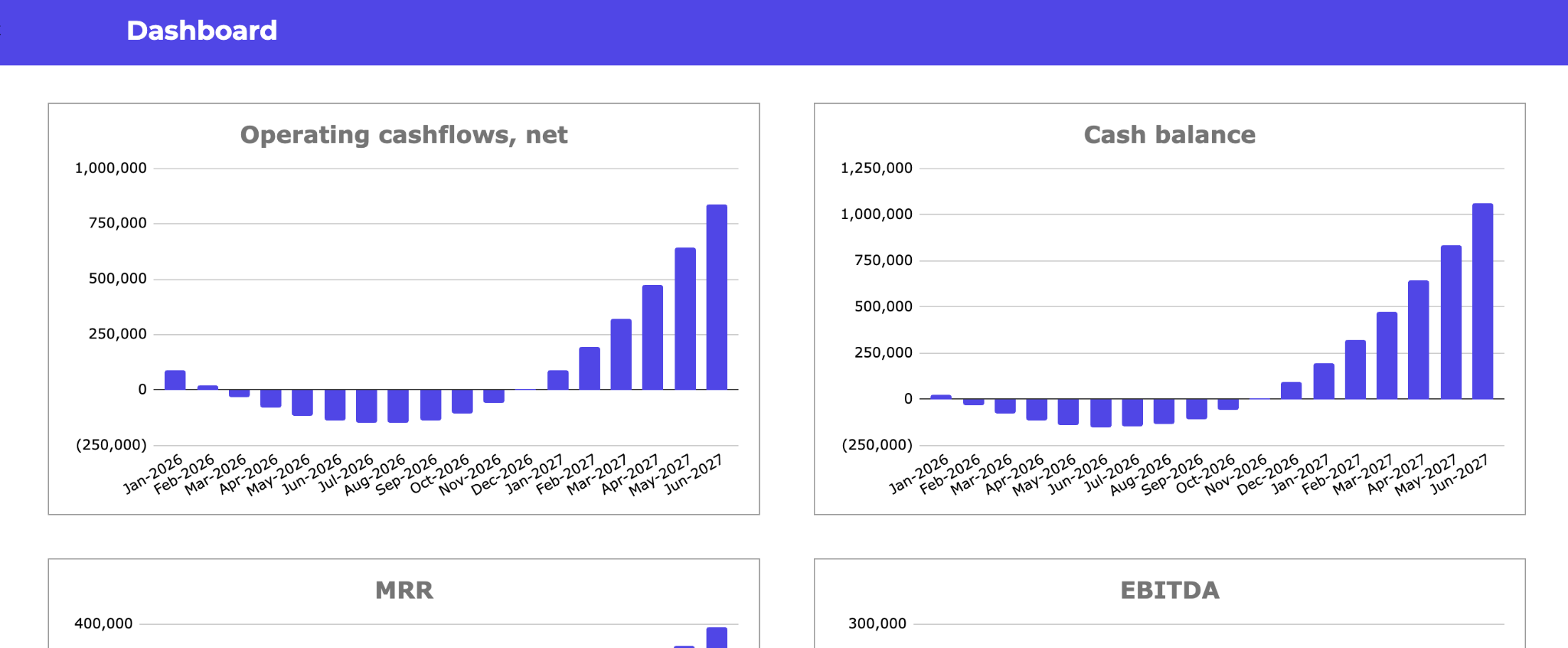
Cash in bank, current inflows, current outflows, and the latest forecast are pulled into one view so the team reacts to what is true now.
You see how far the company is from the runway target, not just that there is a problem.
When you choose the course of action, the team reflects it in the forecast so the plan becomes operational immediately.
We do not stop at showing the problem. We narrow the discussion to the few levers that actually move the runway and recommends a course of action.
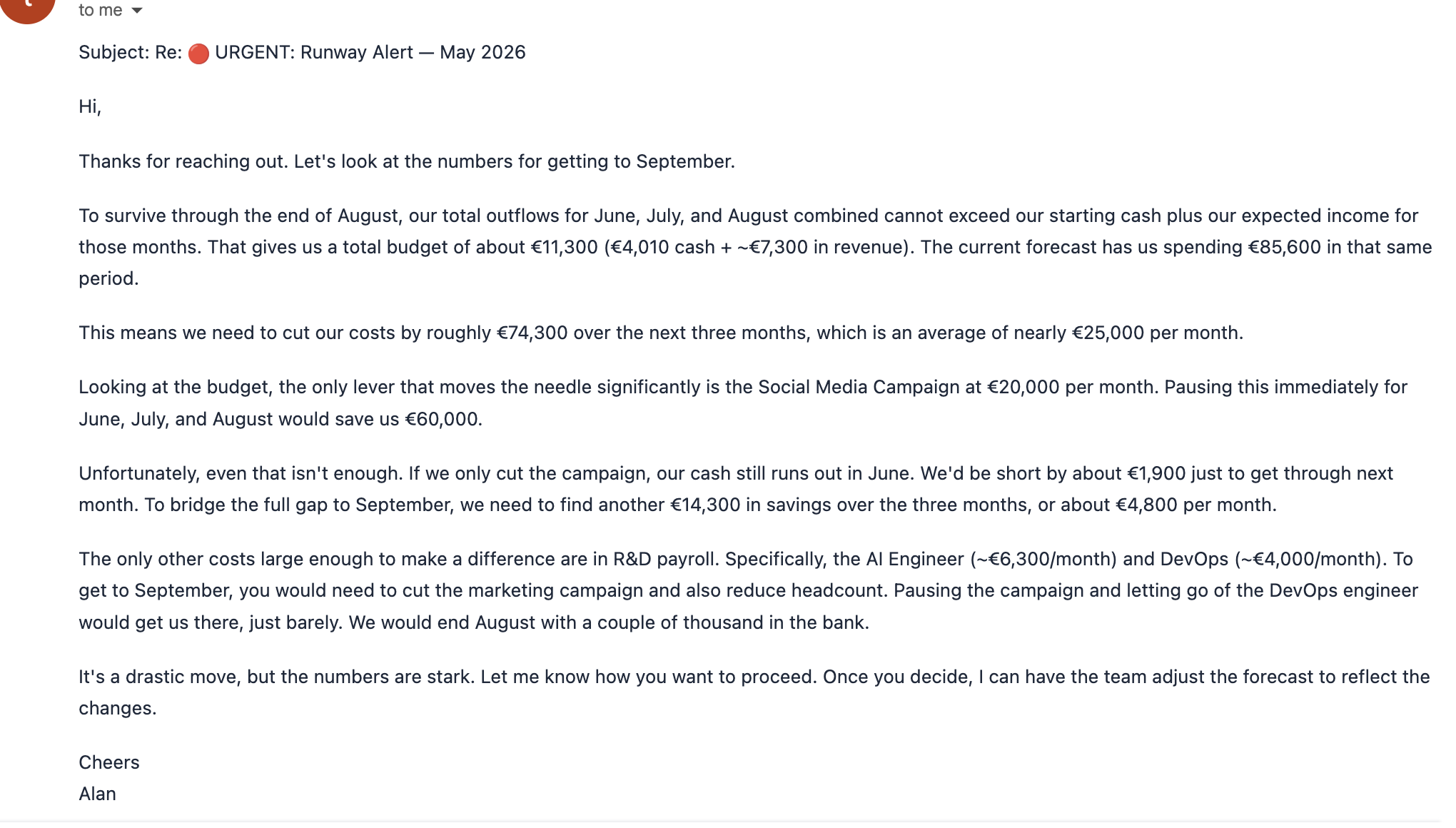
Instead of listing every possible cut, we highlight the small number of actions that materially change the runway.
You get a concrete recommendation tied to the numbers, so the next decision is clear and practical.
You do not need to know how the model should be structured. The team takes care of the structure, keeps an eye on completeness and consistency, and moves the work forward through clear follow-ups.
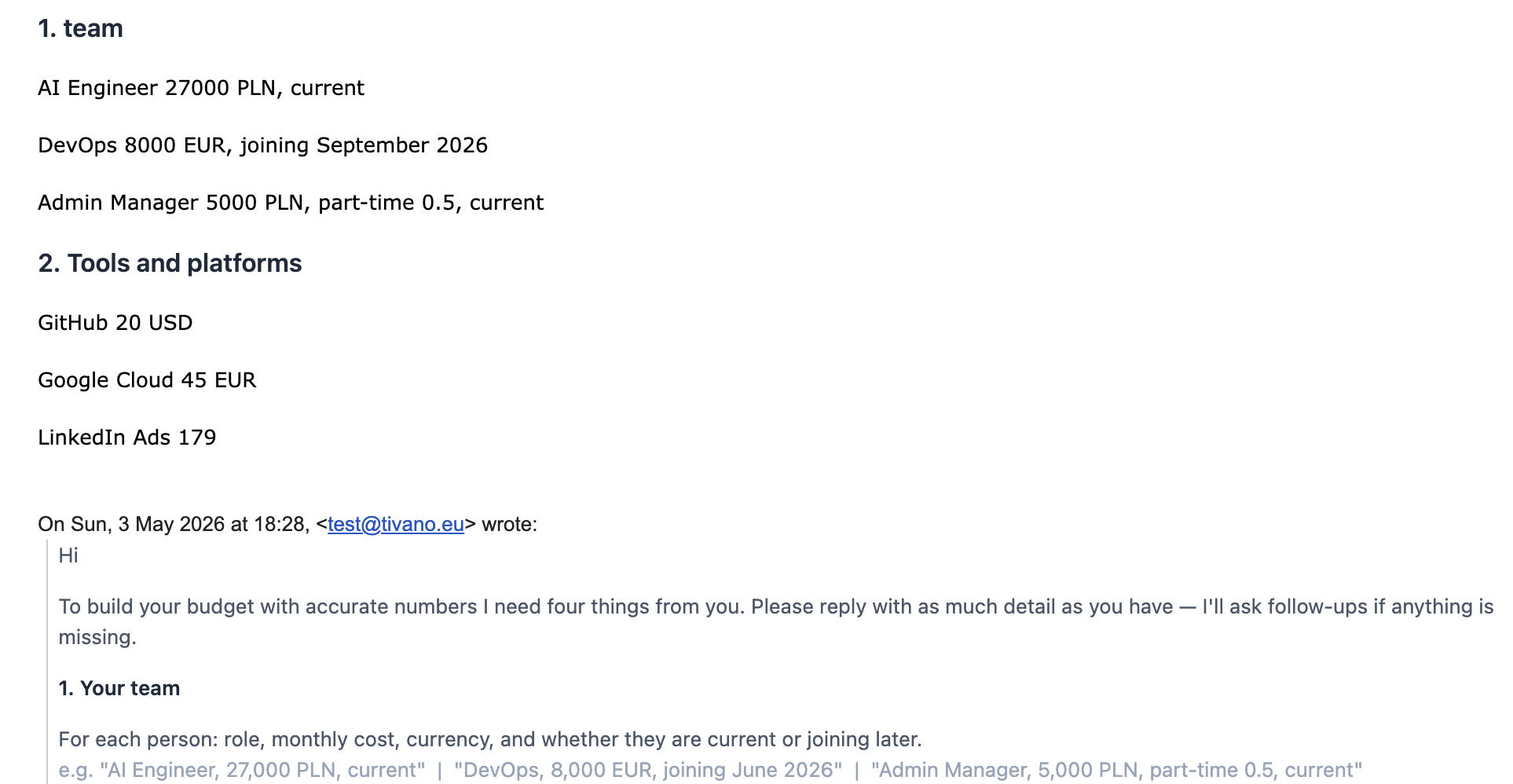
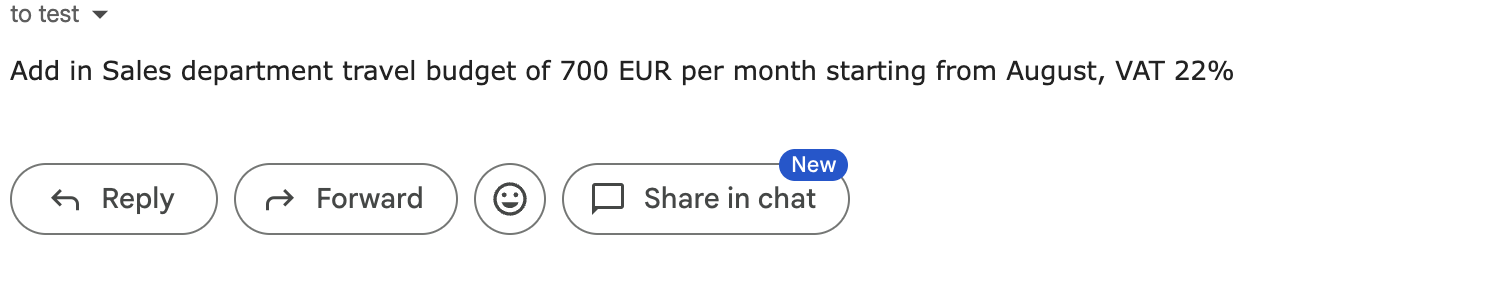
You are not forced into finance templates first. We explain what is needed and collects it through normal email exchanges.
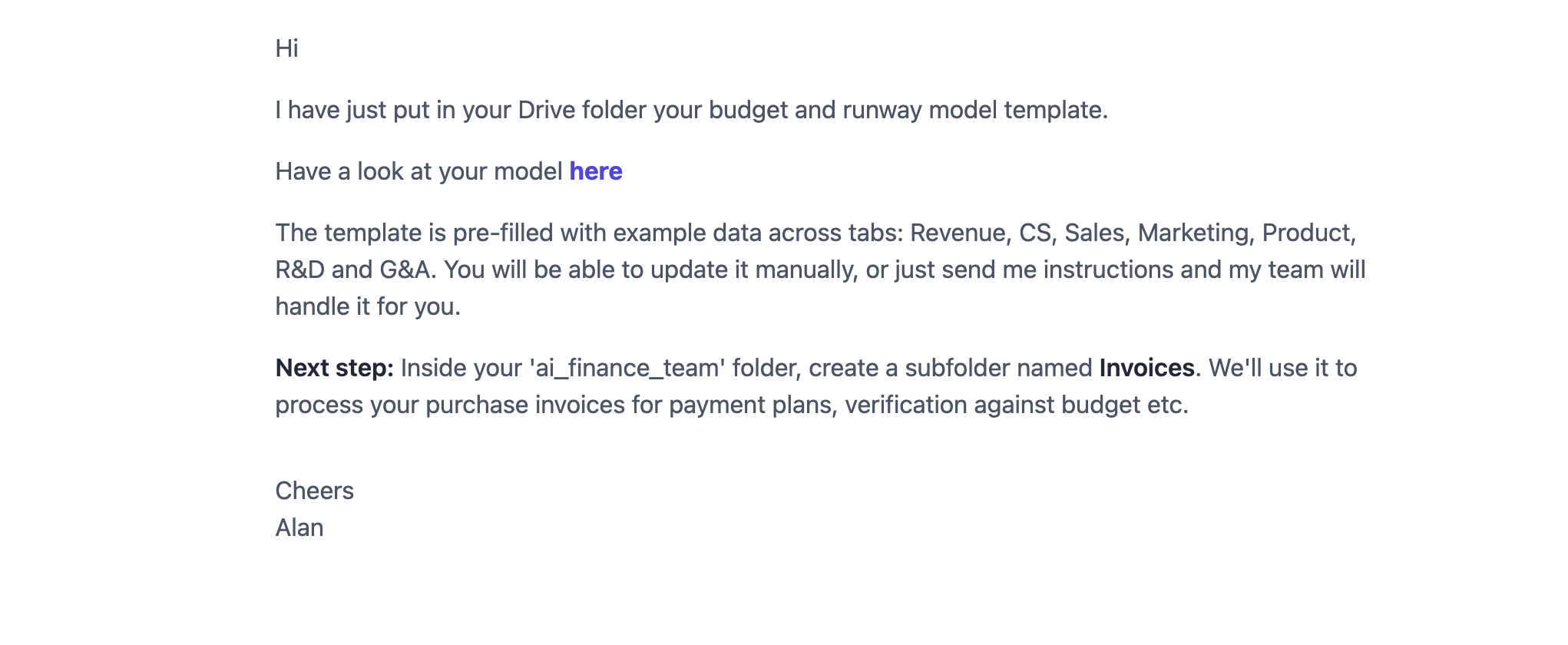
The budget and forecast are put into a structure that is usable, reviewable, and easy to keep current.
If something is missing, inconsistent, or unclear, you get a follow-up before the issue turns into a broken forecast.
This is not only about one-off outputs. The team follows through on the operational layer of finance work so you do not have to manage every step yourself.
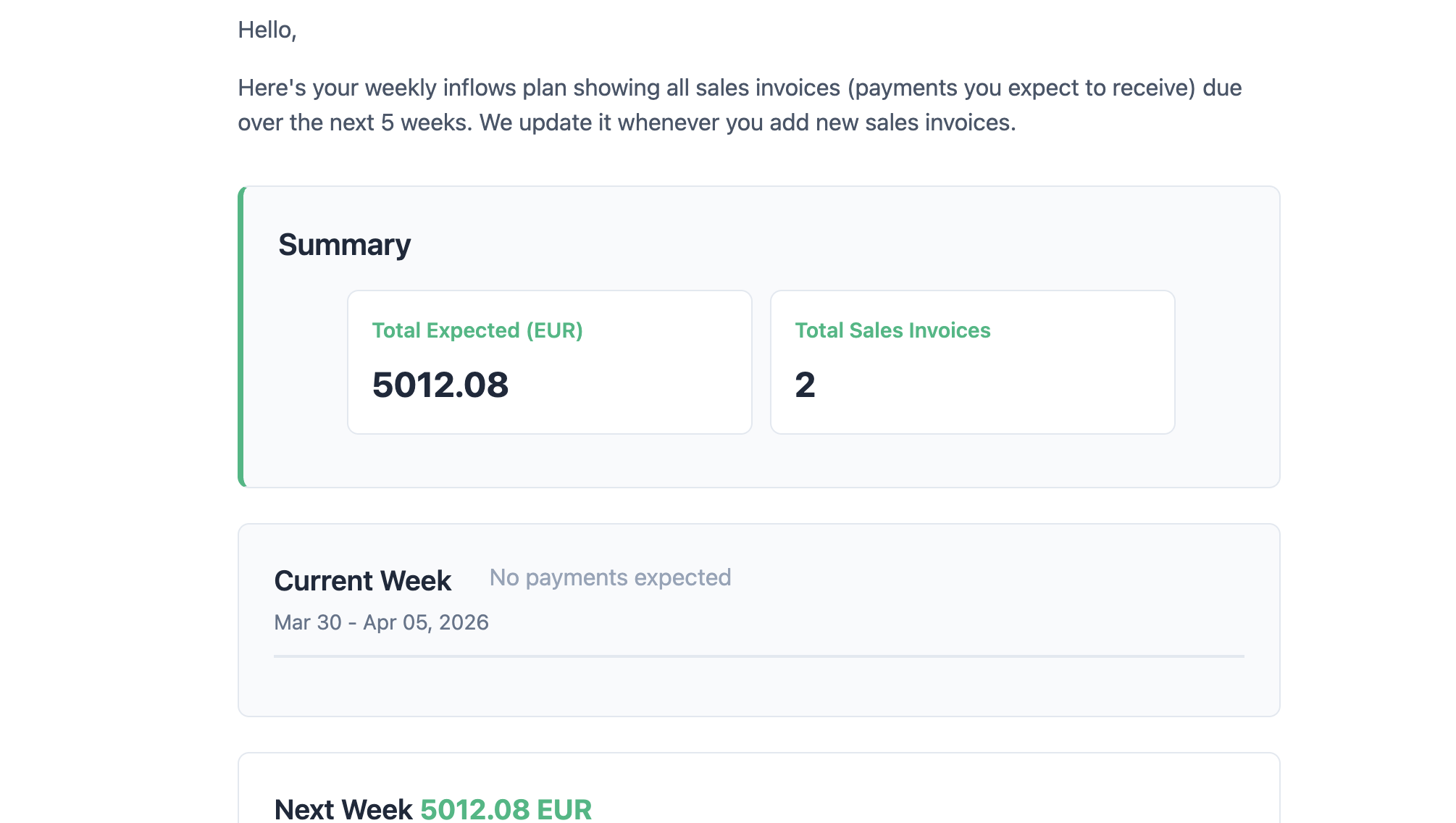
Invoices are collected, checked, organised, and turned into payment and cash views that are ready to use.
We keep expected inflows and outflows current so decisions are based on live finance reality, not outdated assumptions.
If something is missing, we follow up instead of leaving the workflow half-done.
Raw invoice and planning information is turned into updated inflow views, cash views, and practical next steps.
The goal is to reduce back-and-forth and make finance execution feel steady and predictable.
A founder or finance lead sends an email or completes the agreed setup step.
Shared files, models, and working structures are created or updated without you having to manage the mechanics.
Missing items are highlighted, invoice flows are organised, and cash-related views are kept moving.
A clear email, a ready sheet, or an updated dashboard arrives in a form that supports an immediate decision.
We organise the work in a way that you can feel comfortable delegating work that is operationally sensitive. The experience feels human, but the boundaries remain disciplined.
The team works through familiar channels such as email and shared Google files, so important information remains where your business already operates.
Your work is handled on your own Google Drive, so finance operations stay contained and organised.
We keep access deliberate and limited, so sensitive finance work is handled with care.